🏥 What Is G0136?
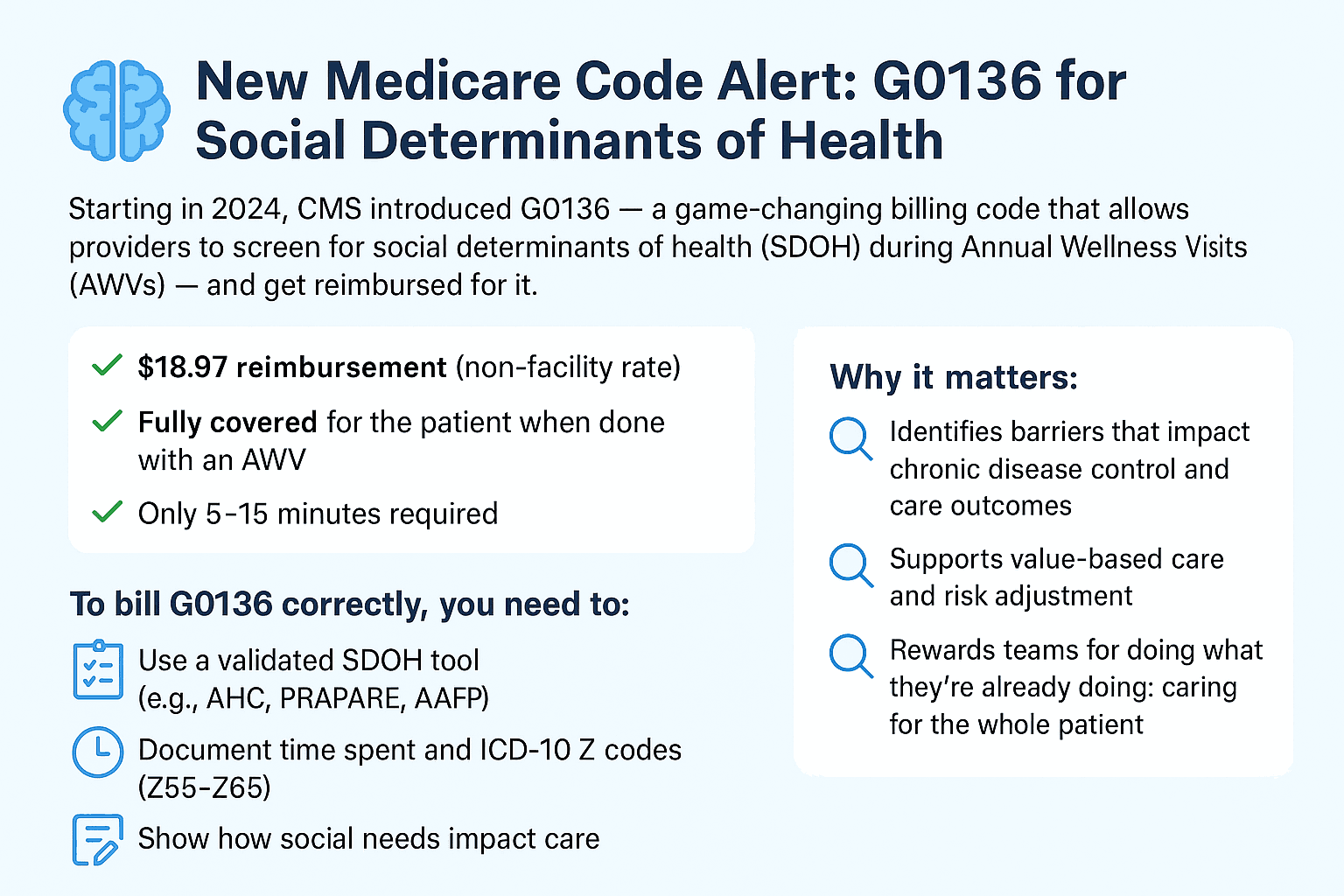
G0136 was introduced by CMS in 2024 and allows billing for:
- Administration of a standardized, evidence-based SDOH risk assessment tool
- Duration: 5–15 minutes
- Frequency: No more than once every 6 months
This assessment must go beyond routine screening—it’s only reportable when unmet social needs may interfere with diagnosis or treatment
💵 Reimbursement: What You’ll Earn
- Average non-facility rate: $18.97, varying by MAC locality (range: $17.02–$24.93)
- Average facility payment: About $5.99, compared to ~$18 non‑facility
- RVUs: ~0.18 work RVU; total ~0.57 RVU in non-facility settings
Note: This service is subject to Medicare deductible & coinsurance, unless performed during an AWV—then it's fully covered for patients
✍️ Billing G0136 with an AWV
1. Perform the SDOH Assessment
Use a validated tool, such as:
- Accountable Health Communities (AHC)
- PRAPARE
- AAFP Social Needs
- HealthBegins
2. Time Requirements
Spend 5–15 minutes on the assessment. Document start and stop times to support billing.
3. Document Social Needs
Record specific SDOH findings using ICD-10 Z codes (Z55–Z65), and explain how they influence clinical decisions.
4. File the Claim
- Include G0438 (initial AWV) or G0439 (subsequent AWV)
- Append G0136-33 modifier on the same date to indicate preventive service and waive cost-sharing.
- Document relevant Z codes as secondary diagnoses.
5. Follow-Up Required
CMS expects providers to address identified needs—e.g., referrals or care planning—with documentation showing how the assessment informed care.
📅 Summary
How often
➔ Every 6 months per provider–patient
Time
➔ 5–15 minutes total time spent on tool
Who can perform
➔ Providers or supervised auxiliary staff
Code/Base reimbursement
➔ G0136 non-facility: $18.97; facility: ~$5.99
AWV cost-share
➔ Waived with -33 modifier during AWV
Z codes required
➔ Z55–Z65 to explain found social needs
Follow-up required
➔ Referral or care action must be documented
✅ Best Practices
- Pre-screening workflow
Use patient questionnaires at check‑in or rooming to flag SDOH needs. - Integrate with AWV
Schedule an extra 5–15 minutes for SDOH during AWV check-ins—capturing the tool, Z codes, time, and follow-up actions. - Staff training
Teach clinical teams about the code’s purpose, time criteria, and documentation expectations. - Monitor reimbursement
Keep an eye on MAC-specific rates and local updates.
🧠 Why It Matters
- Enhances patient care: Identifying barriers leads to better chronic disease control, reduced hospitalizations, and improved health equity.
- Reimburses care coordination: Practices are rewarded ~$19 for valuable social risk screening, with no patient cost during AWV.
- Prepares for value-based care: Documented SDOH and interventions support quality metrics and risk adjustment programs.
✅ Bottom Line
G0136 empowers primary care to bill appropriately for meaningful SDOH assessments—when performed thoughtfully, documented well, and integrated into AWVs. The non‑facility reimbursement (~$19), plus waived cost-sharing during AWVs, makes this a practical and impactful addition to your preventive care toolkit.